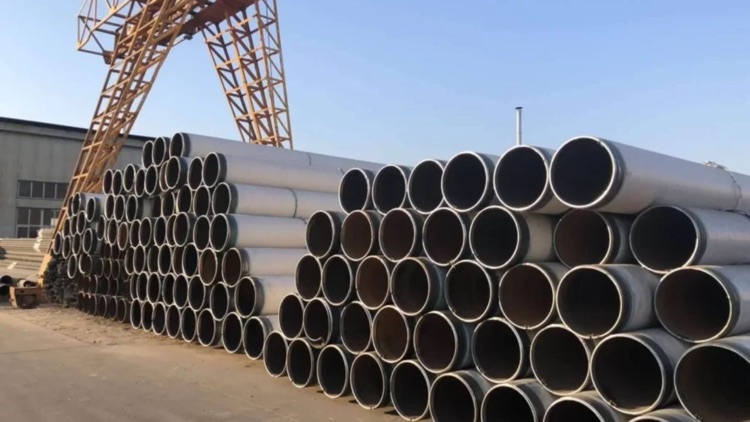
Why MTO Pipe Specifications Need a Manual Check Before the Order Goes Out

Material take-offs for large piping projects are usually generated from design software — P&ID data, isometric drawings, or 3D models exported into a material list. The software is accurate within its own logic, but the output is only as good as the input, and the input is where problems accumulate.
The category of errors that causes the most downstream trouble isn’t wrong quantities. It’s wrong specifications — particularly wrong Schedule numbers for large-diameter pipe — because these errors tend to survive through procurement, arrive as the wrong material, and only get caught when the pipe reaches the field and doesn’t meet the design intent.
Where the Errors Come From
Design software populates pipe specifications based on line class definitions. A line class says: for a given service and pressure class, use this material, this Schedule, this fitting type. When the line class is set up correctly and all the piping on a given line is tagged to the correct class, the MTO output is reliable.
The errors happen at the edges. When a large-diameter line crosses a service boundary — from a high-pressure process line to a lower-pressure utility header — the line class can change at that interface. If the isometric drawing isn’t updated to reflect that change, the software applies the original line class to the entire run. A section of pipe that should be scheduled as a lower-pressure utility gets pulled into the MTO as a higher-pressure, heavier-wall item. Or the reverse: a high-pressure section inherits a utility-line specification.
Line class errors on small-diameter pipe are less consequential — the cost difference between Schedule 40 and Schedule 80 at NPS 2 is modest, and field personnel often catch the discrepancy when the pipe arrives because it’s obviously heavier than expected. At NPS 12 or NPS 16, the difference between Schedule 40 and Schedule 20 isn’t as visually obvious on arrival, and the cost difference is substantial enough to distort the procurement budget significantly in either direction.
What Manual Verification Actually Looks Like
The verification step that catches most large-diameter Schedule errors is straightforward: for each line item in the MTO that represents pipe NPS 8 or larger, confirm that the Schedule number is consistent with the line class for the service at that point, and then confirm the actual wall thickness against a reference.
The second part of that check is the part that’s often skipped. Confirming the Schedule number matches the line class tells you the software did what it was told. Confirming the wall thickness against an SCH 20 pipe chart tells you whether the Schedule designation actually maps to the dimension you’re expecting — particularly relevant where different project teams, different standards, or different software versions may use the same Schedule label to mean slightly different things.
For carbon steel pipe per ASME B36.10M, Schedule 20 is defined starting at NPS 8, and the wall thickness at each size is fixed: 6.35 mm for NPS 8 through NPS 12, stepping up to 7.92 mm for NPS 14 through NPS 18, and 9.53 mm for NPS 20 through NPS 24. If your MTO lists “SCH 20, NPS 10” and the wall thickness column shows anything other than 6.35 mm, something in the data chain has an error.
The Cost Case for Doing This
On a project with several hundred meters of large-diameter carbon steel pipe, the procurement cost of Schedule 40 versus Schedule 20 for the sections that legitimately qualify as low-pressure utility service can differ by tens of thousands of dollars. The direction of the error matters: specifying Schedule 40 where Schedule 20 is correct leads to overpaying for pipe and structural supports. Specifying Schedule 20 where the operating conditions actually require Schedule 40 creates a safety and compliance issue that’s far more expensive to correct after installation.
Neither type of error is exotic. Both appear regularly on projects where the MTO is generated from software and reviewed only for quantities, not for specification consistency.
The manual check doesn’t require reviewing every line item. Large-diameter pipe — NPS 8 and above — represents a small fraction of the total line items in most MTOs but a large fraction of the pipe weight and cost. Reviewing those items specifically, confirming Schedule against service class and actual wall thickness against a reference, takes a few hours and catches the category of error that causes the most downstream disruption.
It’s the kind of check that seems unnecessary until the pipe arrives and doesn’t match what the design required.